Recognition is allowed. Control is not.
The money exists. The need exists. The failure is moral.
Communities submit costed plans for public-good repair. People with financial privilege can fund them without control, ownership, branding rights, or strings attached.
This is not charity theatre. This is a public repair bill.
Read the donor pledge →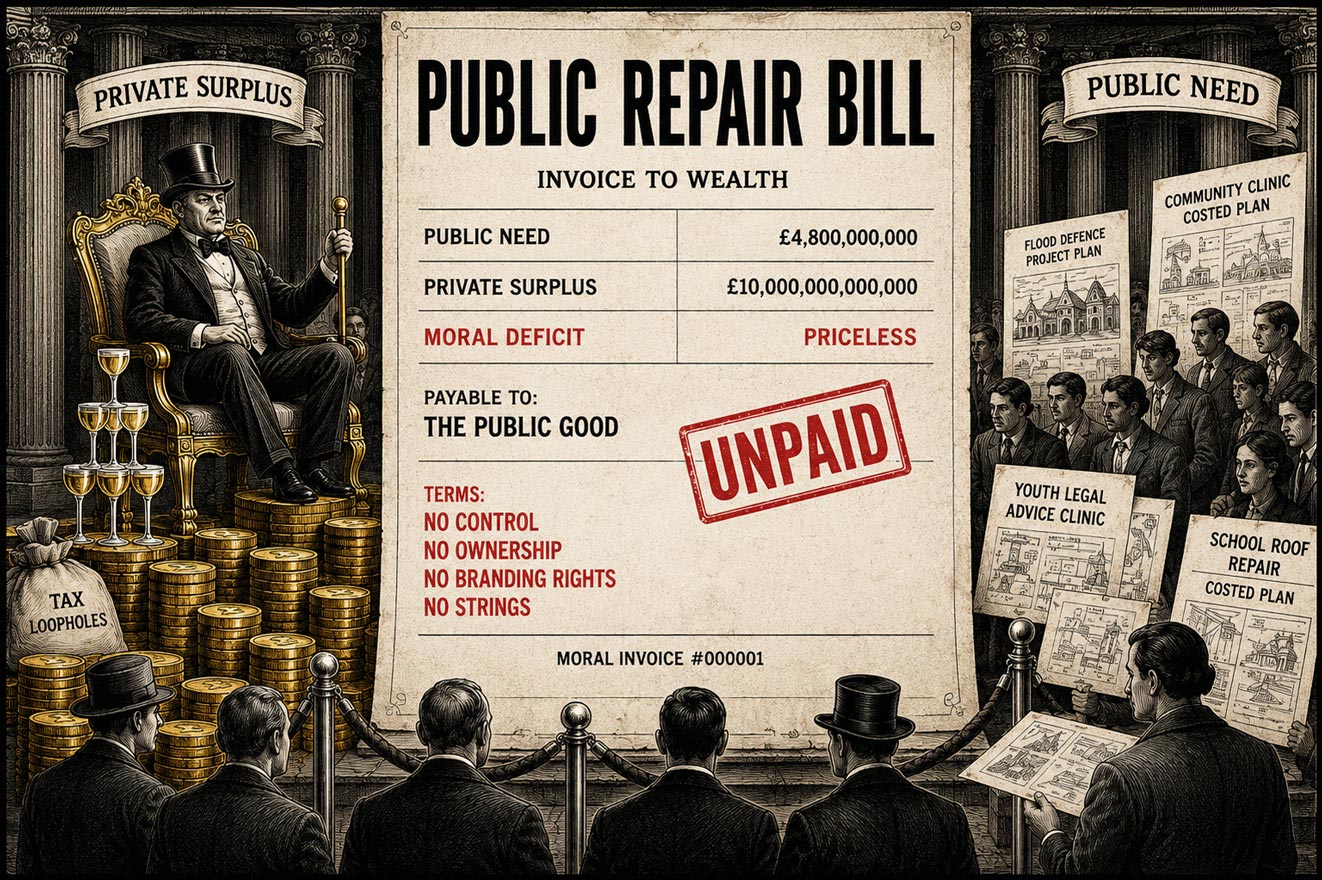
Audit snapshot
The public need is visible. The surplus wealth is visible. The missing link is moral permission.
Figures shown through the public repair ledger. Verification status varies by project record.
Featured repair projects
These are not wishes. They are costed repair plans — reviewed for trust, funded without strings.
No ownership.
No control.
No naming rights.
Back into public life.
No published projects yet. Check back as the ledger fills.
Browse the public repair ledgerSee every project →How it works
- Communities submit costed repair plans.
- Projects are reviewed for trust.
- Approved projects are published transparently.
- Donors fund without strings.
- Delivery is tracked and verified.
The no-strings rule
A donation is not a purchase of power.
- No ownership
- No control
- No naming rights
- No political influence
- No procurement edge
- No reputation laundering
Social capital score
Earned by returning wealth — not buying status.
- Funding confirmed → Score provisional
- Repair verified → Score confirmed
- Pledge violated → Score revoked
The failed trickle-down archive
- What trickle-down promised
- What actually happened
- The public repair bill
- Why no-strings funding matters
The repair bill is public.
If your community has a costed plan, submit the invoice. Submit a project →
If you have more than enough, fund repair without strings. Fund without strings →
The money exists. The need exists.Now record the repair.